
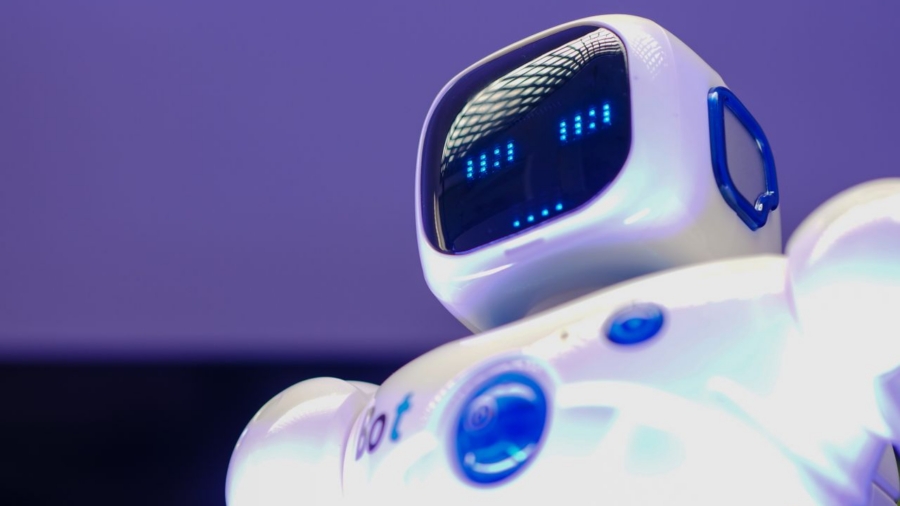
Responsible AI starts with understanding the business before trying to automate it.
Why Vaspian says no
AI is moving quickly. New voice agents, auto attendants, and call solutions appear every week. At Vaspian, we have turned down at least as many third-party AI solutions as we have turned up—not because we doubt AI, but because a fast demo does not always solve a real business problem.
A phone call is rarely just a phone call.
It may involve a customer’s history, a CRM record, a compliance requirement, an after-hours rule, or a situation that needs human judgment. If AI does not have that context, it can automate the wrong thing very efficiently.
We listen before we automate
Our approach begins with real conversations: phone calls, transcripts, customer meetings, support issues, and employee feedback. Vaspian Call Intelligence helps us look for patterns such as unresolved customer problems, missed follow-ups, billing issues, and opportunities to improve service.
The goal is not to produce more AI-generated text.
The goal is to understand what is actually happening so we can build the right solution.
Start small and stay accountable
Responsible AI means:
Solving a specific problem before attempting broad automation.
- Grounding systems in authorized business context.
- Protecting customer data through access controls, tenant isolation, and redaction.
- Testing for privacy, security, prompt injection, and incorrect outputs.
- Making uncertainty visible and keeping people involved.
- Expanding only after real-world results support it.
We have seen how complicated auto-attendant designs, incomplete call data, compliance questions, and immature AI tools can create more work instead of less. Saying “not yet” is sometimes the most responsible product decision.
AI should strengthen people
At Vaspian, we believe AI should augment employees—not erase their judgment. AI can help people search, summarize, identify patterns, and follow through, while employees remain responsible for the decisions and relationships that require experience and empathy.
The future of responsible AI is not about being first to automate every call.
It is about understanding the business well enough to know where AI belongs, giving it the right context, and knowing when a person should take over.
When Vaspian says yes to AI, it is because the technology solves a real problem, with real context, for real people.
This article reflects Vaspian’s evolving approach to responsible AI. Safeguards and deployment choices depend on the product, customer, industry, data, and applicable legal requirements.
Context comes before capability
An AI system can be technically impressive and still be a poor fit for the work happening around it. That is why Vaspian looks beyond what a tool can do and asks what information it needs, what decision it is helping with, and what happens when the situation does not fit the expected pattern.
Business context changes what a good answer looks like
A customer asking about a bill, an appointment, a service problem, or a missed follow-up may use similar language while needing very different responses. The right next step depends on information that exists outside the words spoken during a single moment of the call.
That context may come from the customer relationship, the reason for the call, previous conversations, internal procedures, or rules that apply to a specific department. Responsible automation begins by identifying which information the system is authorized to use and which information a person still needs to interpret.
More data is not automatically better context
Giving an AI system access to everything is not the same as giving it the right information. Access should match the job the system is expected to perform. The narrower and clearer the task is, the easier it becomes to understand whether the AI is helping or simply creating another layer employees have to manage.
This is one reason call recording, transcripts, analytics, and real customer conversations matter. They provide a practical starting point for understanding what actually happens before deciding what should happen automatically.
Testing has to look like the real world
A clean demonstration is useful, but businesses do not operate inside clean demonstrations. Real conversations include interruptions, unclear requests, unusual situations, missing information, emotional customers, and questions no workflow designer thought to put on the test list.
A correct answer is only part of the test
Responsible AI testing has to examine more than whether the system produces a polished response. It also matters whether the system uses the correct information, respects access boundaries, recognizes uncertainty, and behaves appropriately when a request falls outside its intended role.
The NIST AI Risk Management Framework provides a useful way to think about AI risk through governance, measurement, and ongoing management rather than treating deployment as the end of the process. That matches a practical reality: an AI system needs to be evaluated in the environment where people actually use it.
The strange cases are often the useful cases
The easy interactions are rarely where a system proves whether it belongs in a business workflow. The useful tests are the calls where information is incomplete, a customer changes direction, the available context conflicts, or the AI simply does not know enough.
Those situations show whether the system knows its limits. They also show whether employees can understand what happened and step in without having to untangle a chain of automated decisions first.
Human handoffs are part of the design
Keeping people involved does not mean AI has failed. In many situations, knowing when to involve a person is part of what makes the system useful.
Uncertainty needs somewhere to go
An AI system should not be rewarded for sounding certain when the underlying information is uncertain. If the context is incomplete or a decision requires judgment, escalation should be an expected path rather than an exception everyone hopes never happens.
That matters especially when a conversation affects a customer relationship, a sensitive issue, or a business process where an incorrect assumption creates additional work. A useful AI system can reduce repetitive steps while still making room for someone who understands the larger situation.
Employees still own the relationship
AI can summarize a conversation, surface a pattern, or help someone find information more quickly. It cannot replace the experience employees build by understanding customers, recognizing unusual circumstances, and making decisions that require empathy or accountability.
The point is not to remove people from every interaction. The point is to give them better information and reduce the repetitive work that keeps them from focusing on the interactions where their judgment matters most.
Responsible AI grows in stages
Broad automation is tempting because it promises one large solution. Vaspian’s approach is to start with a defined problem, learn from the results, and expand only when the evidence supports the next step.
Start with something you can evaluate
A narrow use case makes it easier to answer basic questions. Did the system solve the problem it was intended to solve? Did employees trust the information it produced? Did it create new exceptions or extra work? Were there situations where a person needed to take over?
Tools such as call analytics and speech analytics can help make patterns in real conversations more visible. That visibility gives teams something concrete to evaluate before they decide whether a larger automation project makes sense.
Expansion should follow evidence, not excitement
Once a narrow use case works reliably, the next question is whether the same approach belongs somewhere else. That decision should come from observed results and a clear understanding of the new workflow, not from the assumption that success in one area automatically transfers to another.
Different departments can have different data, customer expectations, operating rules, and levels of risk. Responsible scaling means treating those differences as part of the design rather than discovering them after the automation is already running.
The phone system is part of the AI system
AI used around customer conversations does not operate in isolation. It sits alongside routing, recording, reporting, employee workflows, customer history, and the basic job of making sure the right person can communicate with the right customer.
Automation cannot fix a process it does not understand
If calls already go to the wrong place, information is incomplete, or employees rely on undocumented workarounds, adding AI may simply make those problems move faster. Understanding the underlying communication process comes first.
That is why responsible AI connects naturally to the broader business phone system. The technology is most useful when it supports the way calls are handled rather than creating a separate experience that employees have to work around.
Good automation should make the next step clearer
The practical test is simple: does the system help the employee or customer understand what happens next? A useful summary should lead to action. A useful pattern should help someone make a decision. A useful automated step should remove work rather than quietly moving it somewhere else.
That is a higher bar than producing impressive output, but it is also a more useful one. Businesses do not need AI because AI exists. They need technology that makes real work easier to understand and easier to complete.
Knowing when to say yes
Responsible AI is not a race to automate the largest number of tasks. It is a process of understanding where technology genuinely helps and where the surrounding business context still matters more than the automation.
The decision starts with the problem
For Vaspian, saying yes means the problem is clear, the system has the right authorized context, the risks have been considered, and people still have a meaningful role when the situation requires them.
That approach may be slower than turning on every new AI tool that appears. It is also far more useful than discovering after deployment that the technology solved the wrong problem.
When AI belongs, it should make work clearer, help people act on what they already know, and give them better visibility into the conversations that drive the business. When it does not belong, saying “not yet” is still a decision—and sometimes it is the most responsible one.
FAQ
This section answers common questions related to responsible AI at Vaspian.
Why does Vaspian turn down some AI solutions?
A fast demonstration does not always solve a real business problem. Vaspian looks at the business context, the workflow, the available information, and the need for human judgment before deciding whether an AI solution belongs.
What does Vaspian mean by starting small with AI?
It means beginning with a specific problem that can be tested and evaluated. Broader automation comes later only when real-world results support expanding the system.
Why is business context important for AI?
A customer conversation can involve history, internal rules, compliance requirements, or circumstances that are not obvious from a single request. AI needs authorized and relevant context to provide useful support.
Does responsible AI remove people from customer conversations?
No. Vaspian’s approach is to use AI to help people search, summarize, identify patterns, and follow through while employees remain responsible for decisions and relationships that require experience and empathy.
How does Vaspian evaluate AI risk?
Vaspian’s approach includes testing for privacy, security, prompt injection, incorrect outputs, and situations where uncertainty needs to be visible. The goal is to understand how the system behaves in real workflows before expanding its role.
When should an AI system hand a situation to a person?
A human handoff makes sense when the system lacks necessary context, the situation requires judgment, or uncertainty makes an automated response inappropriate. Knowing when not to automate is part of responsible AI.